Build personal safety nets.

Alexia also thought beyond shirts and dresses. With the profits from her tailoring, she began to stock up on materials she consistently uses (like thread, zippers, and fabric), and also sells some of her stock to other tailors in the area. This is one source of extra income that helps her build a financial safety net. She also owns land where she grows and cultivates rice, which feeds her family and pays the workers who help her with the harvest. She’s also learning how to cut and style hair as an additional skill she’s interested in.
“There aren’t always regular clients to buy my clothes, but I can get a steady stream of clients for hairdressing” she explains of the extra skill training. In the future, she envisions a space that would allow her to run both businesses simultaneously.
Many of the families works with largely earn their income from agricultural work and pastoralism, but have also found other ways to earn a little extra while providing services to their communities: In Chad, Graduation participant Mahadia Gamar used some of the investment money provided as part of the program to purchase a peanut grinding machine.
“When the ladies in our village bring me their groundnuts, I am able to grind them for a fee,” she says. “The money I earn from this helps pay for my children’s school fees.” She also contributes more from this income into her local Village Savings and Loan Association.
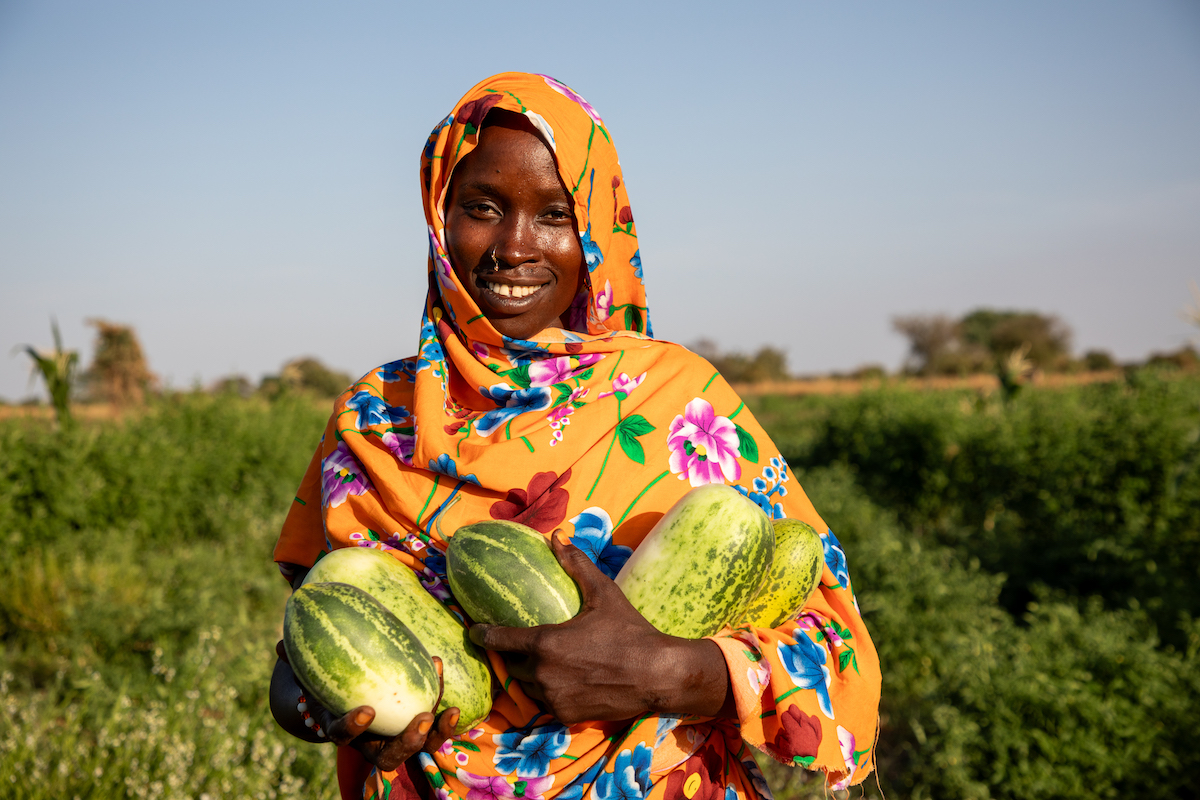
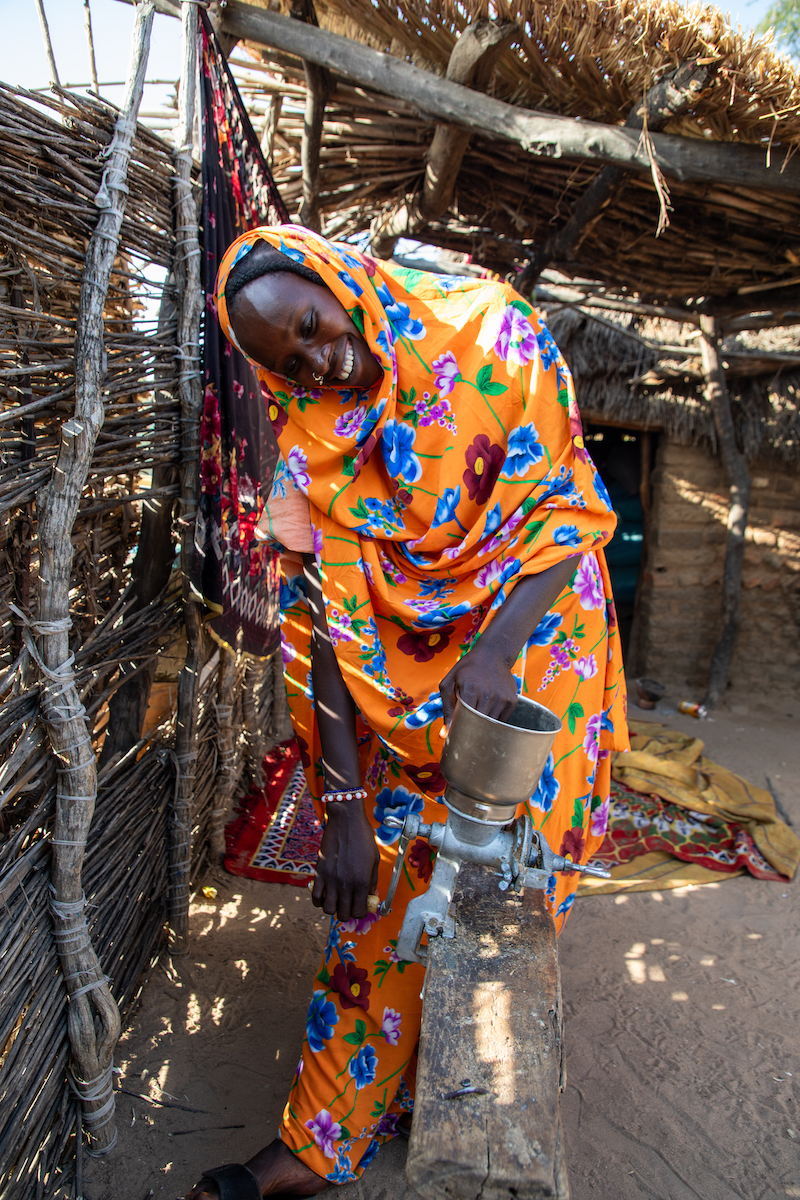
Mahadia Gamar has participated in Chad's Green Graduation Program. Here, she shows off her improved harvests on her farm, and the peanut grinder she bought with Concern's support. She earns extra income grinding nuts for other women in her community.


Comments
Post a Comment